
First, protect the area.
If water is actively spreading toward electrical equipment, a finished ceiling, flooring, or stored items, turn the HVAC system off if you can do so safely. Do not touch wet wiring or open equipment panels.
Common causes of AC water leaks
A blocked condensate drain
Dust, biological buildup, or debris can restrict the line that carries condensation away from the indoor coil. Water may back up into the pan or trigger a float switch.
A failed condensate pump
Some installations use a small pump because gravity alone cannot move the water to a drain. A failed motor, float, tubing connection, or power problem can cause overflow.
A cracked, rusted, or displaced pan
The drain pan catches condensation below the coil. Damage or poor alignment can let water escape before it reaches the line.
A frozen evaporator coil
Restricted airflow or a cooling-system problem can freeze the coil. When the ice melts, the drainage system may not contain the amount of water. Ice is a reason to stop cooling and schedule a diagnostic.
Another nearby source
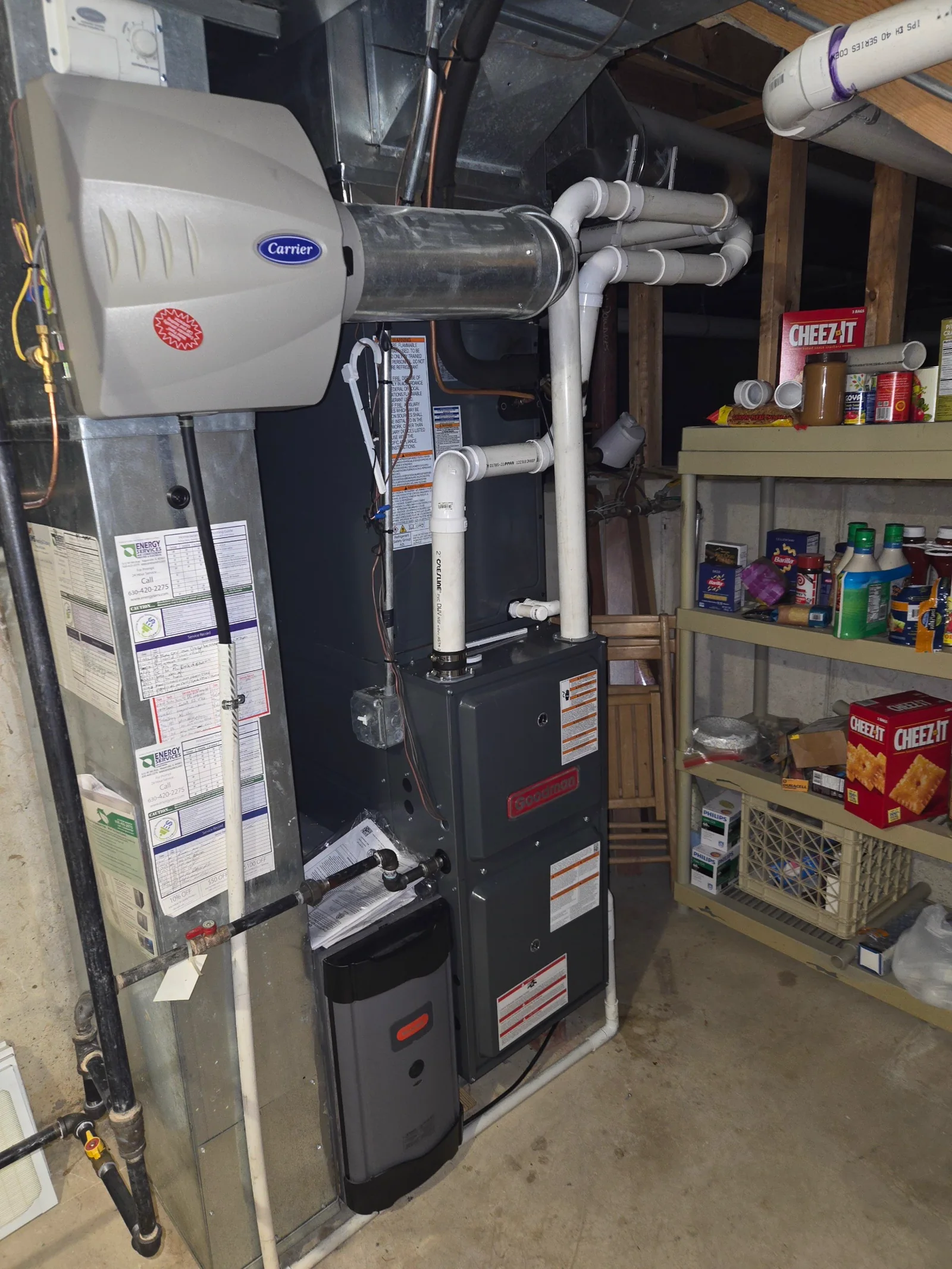
High-efficiency furnaces, humidifiers, water heaters, plumbing connections, and utility drains can all produce water near HVAC equipment. The location of the puddle alone does not prove the AC is responsible.
Can you clear it yourself?
Homeowners can check the filter and look for obvious external tubing damage without opening equipment. Avoid compressed air, chemicals, or disassembly unless you know the installation and the manufacturer's requirements. A temporary opening in the line will not fix a failed pump, frozen coil, or damaged pan.
What a technician should verify
A drainage visit should identify the source, inspect the pan and line, test the pump and safety switch where present, check for coil icing or airflow restrictions, and verify that water drains correctly after service.